If the Covenant Is Real, Israel Is Still Real
Updated: Sep 20

A lot of confusion in modern preaching comes from this one problem: men like covenant language, but they do not like covenant boundaries.
They will preach promise. They will preach mercy. They will preach elect. They will preach kingdom. They will preach salvation. They will preach the return of Christ. They will preach the New Jerusalem. But when it is time to ask the plain question, who did God say the covenant was with, the room gets quiet, the language gets vague, and suddenly everything becomes general, symbolic, and broad.
That is where error slips in.
This is not a small issue. This is not a side issue. This is not a matter of academic curiosity. If the covenant belongs to a people, then the identity of that people matters. If the covenant has named recipients, then preaching as though those recipients disappeared is not sound doctrine. If God said He would gather scattered people back into covenant, then replacement theology cannot be true in the way it is commonly preached.
We need to slow down and deal with the words on the page.
The ground rule is simple:
If it is not written, and we do it anyway, it is tradition.
Tradition may be sincere. Tradition may be old. Tradition may be popular. Tradition may have been preached by men we respect. But tradition is still not the same thing as what is written.
That is especially important when we deal with covenant.
The New Covenant Has Named Recipients

The first place we need to start is not with emotion, race, church politics, or denominational tradition. We need to start with the plain wording of scripture.
Jeremiah 31:31
“Behold, the days come, saith the LORD, that I will make a new covenant with the house of Israel, and with the house of Judah:”
Stop right there.
When God announced the new covenant, He did not say He was making it with a brand new replacement people. He did not say He was dissolving Israel into a vague spiritual category. He did not say He no longer cared who the covenant was with. He named the recipients.
The house of Israel. The house of Judah. That matters. Now look at the New Testament confirmation.
Hebrews 8:8
“For finding fault with them, he saith, Behold, the days come, saith the Lord, when I will make a new covenant with the house of Israel and with the house of Judah:”
The New Testament does not correct Jeremiah here. It does not expand the wording into a replacement formula. It repeats the same covenant recipients. That should settle something immediately.
The New Covenant is not introduced in the Bible as a covenant made with a new unnamed people. It is introduced as the renewal and fulfillment of covenant dealing with Israel and Judah.
That does not mean there are no questions to answer after that. It means we are not allowed to ignore that as the starting point. A lot of preaching today acts like broad salvation language can erase named covenant recipients. It cannot.
Inclusion is not the same as replacement. That line needs to stay in our minds the whole time.
Christ Came in Line With Those Promises

The next problem in modern doctrine is that men speak as though Jesus came to build something detached from the promises made to the fathers. But the scripture does not talk like that.
Matthew 15:24
“But he answered and said, I am not sent but unto the lost sheep of the house of Israel.”
Jesus did not say this by accident. He did not speak carelessly. He said He was sent to the lost sheep of the house of Israel. Now ask the obvious question: if Israel no longer matters in covenant, why is Christ’s mission described this way?
Some will try to rush past that verse. Some will say, “Well, that was only during His earthly ministry.” But even that does not solve the problem. It still proves that the covenant people were not irrelevant. It still proves that the mission of Christ is rooted in Israel-centered promise language.
Then Paul makes it even plainer.
Romans 15:8
“Now I say that Jesus Christ was a minister of the circumcision for the truth of God, to confirm the promises made unto the fathers:”
Read that slowly. Christ was a minister of the circumcision. For the truth of God. To confirm the promises made unto the fathers.
What fathers? Abraham, Isaac, Jacob. What promises? Covenant promises. To whom were those promises made? Not to an undefined replacement body. To the seed God had already named in covenant history.
So when men preach Christ as though He came to erase that structure, they are not handling the text honestly.
Christ did not come to destroy the promises. He came to confirm them. Christ did not come to dissolve the covenant language. He came in line with it. Christ did not come to make Israel irrelevant. He came in the lane of promises made unto the fathers.
That is Bible.
The Tribes Are Not Treated Like Lost Fiction in the New Testament
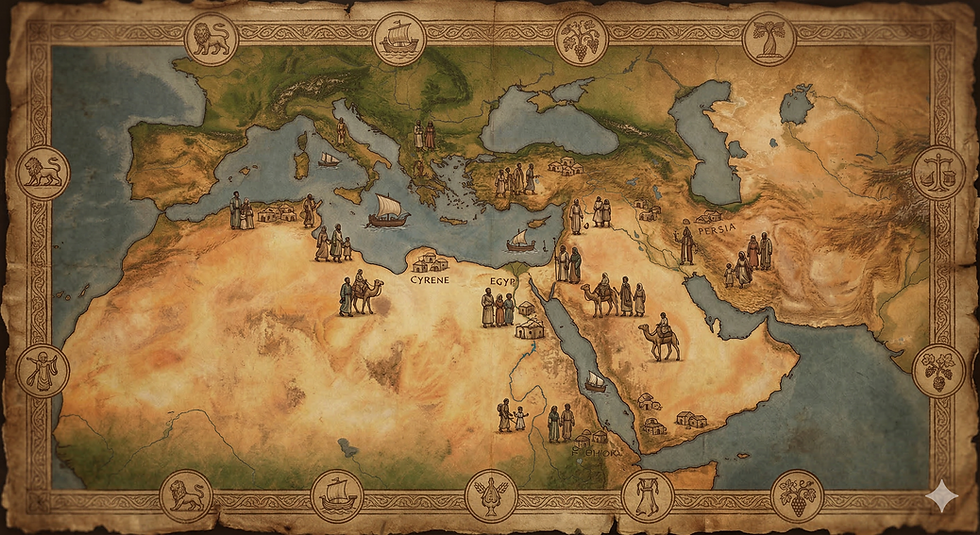
Another common error is the idea that the tribes disappeared into irrelevance. Men talk like tribal language was an Old Testament relic that no longer had meaning once the New Testament began. But that is not how the apostles speak.
James 1:1
“James, a servant of God and of the Lord Jesus Christ, to the twelve tribes which are scattered abroad, greeting.”
Why does James write this way if the twelve tribes are functionally gone?
He did not say “to the general church.” He did not say “to all humanity equally.” He did not say “to a brand new people disconnected from Israel.” He said:
to the twelve tribes which are scattered abroad. That does not sound like disappearance. That sounds like continuity through scattering.
Then Paul says this:
Acts 26:7
“Unto which promise our twelve tribes, instantly serving God day and night, hope to come. For which hope’s sake, king Agrippa, I am accused of the Jews.”
Notice the wording. Our twelve tribes.
Paul is not talking like the tribal structure has become meaningless. He is not talking like Israel got spiritually replaced and therefore tribal language no longer matters. He says our twelve tribes.
Then he gets even more personal.
Romans 11:1
“I say then, Hath God cast away his people? God forbid. For I also am an Israelite, of the seed of Abraham, of the tribe of Benjamin.”
Look at how specific that is. An Israelite. Of the seed of Abraham. Of the tribe of Benjamin. Why would Paul speak with that level of covenant and tribal specificity if those distinctions had become empty?
And Luke records this:
Luke 2:36
“And there was one Anna, a prophetess, the daughter of Phanuel, of the tribe of Aser…”
Again, tribal language survives into the New Testament record. So the New Testament does not sound like the tribes vanished into myth. It sounds like the tribes remained real, though scattered, diminished, judged, and in need of regathering.
That matters because a lot of false doctrine depends on the assumption that Israel disappeared as a meaningful covenant category. But the apostles do not write that way.
God Did Not Cast Away His People
This point should end a lot of confusion by itself.
Romans 11:1-2
“I say then, Hath God cast away his people? God forbid. For I also am an Israelite, of the seed of Abraham, of the tribe of Benjamin. God hath not cast away his people which he foreknew…”
How much clearer can it get? Paul asks the question directly. Has God cast away His people? And then he answers it directly. God forbid.
That means any doctrine that functions like this:
Israel no longer matters
the covenant people were discarded
the church replaced Israel in a total sense
the promises can be detached from the original recipients
that doctrine already has a serious problem with Romans 11.
Now, men may try to soften it. Men may say, “Well, it just means God still saves some Jews.” But even that is already an admission that the total replacement idea is too simple. The text does not say God erased His people. The text says He did not cast away His people which He foreknew.
That is covenant continuity language. So if God did not cast away His people, then where did the popular replacement framework come from? That is the question more preachers need to ask.
Gathering Language Is a Problem for Replacement Theology
Replacement theology gets even weaker when we deal with the gathering texts. Why? Because you do not gather a people you have replaced. You gather a people you still claim. And the Bible is full of gathering language.
Isaiah 11:11-12
“And it shall come to pass in that day, that the Lord shall set his hand again the second time to recover the remnant of his people… And he shall set up an ensign for the nations, and shall assemble the outcasts of Israel, and gather together the dispersed of Judah from the four corners of the earth.”
That is not vague. That is not symbolic fog. That is not replacement.
That is:
remnant of his people
outcasts of Israel
dispersed of Judah
regathered from the earth
This is restoration language.
The Strong Covenant-Gathering Bridge: Pass Under the Rod

One of the strongest passages in this whole discussion is Ezekiel 20, because it connects scattering, gathering, judgment, and covenant in one place.
Ezekiel 20:34-38
“And I will bring you out from the people, and will gather you out of the countries wherein ye are scattered, with a mighty hand, and with a stretched out arm, and with fury poured out. And I will bring you into the wilderness of the people, and there will I plead with you face to face. Like as I pleaded with your fathers in the wilderness of the land of Egypt, so will I plead with you, saith the Lord GOD. And I will cause you to pass under the rod, and I will bring you into the bond of the covenant: And I will purge out from among you the rebels, and them that transgress against me…”
This is a powerhouse passage. Look at what is all sitting there together.
First, the people are scattered among countries. Second, God gathers them out. Third, He pleads with them face to face. Fourth, He causes them to pass under the rod. Fifth, He brings them into the bond of the covenant. Sixth, He purges out the rebels.
This is not church vagueness. This is not replacement language. This is covenant enforcement and regathering. Notice especially that phrase: “the bond of the covenant.” That tells you everything.
In the gathering era, God is not speaking like the covenant disappeared. He is not speaking like the covenant was transferred into a vague replacement body. He is speaking like He still has a covenant people, still has covenant authority over them, still separates within them, and still purges rebels from among them.
That is not replacement. That is restoration with judgment. And notice something else: not everybody gathered is automatically approved. He says He will purge out the rebels.
That is important, because some people hear “gathering” and automatically think universal inclusion without distinction. But the scripture shows God gathering, examining, judging, and purging within covenant structure.
That is why “pass under the rod” is so important. It shows measurement. It shows selection. It shows order. It shows accountability. It shows covenant authority.

Christ’s Return Continues the Same Pattern
Now we move to the return of Christ.
Matthew 24:31
“And he shall send his angels with a great sound of a trumpet, and they shall gather together his elect from the four winds, from one end of heaven to the other.”
A lot of men quote this verse as though “elect” is just a floating category detached from everything the prophets already said. But why would we read it that way?
If Jeremiah says the New Covenant is with Israel and Judah, if Hebrews repeats it, if Isaiah says God gathers the outcasts of Israel and dispersed of Judah, if Ezekiel says He gathers them from the countries, causes them to pass under the rod, and brings them into the bond of the covenant, then why would Matthew 24 suddenly be read as though gathering has nothing to do with covenant people?
That makes no sense. The Bible’s pattern is covenant, scattering, regathering, correction, and restoration. Not replacement. Christ’s return does not cancel the prophets. Christ’s return fulfills the pattern they spoke of.

The Scattered Children Gathered in One
John 11:51-52
“And this spake he not of himself: but being high priest that year, he prophesied that Jesus should die for that nation; And not for that nation only, but that also he should gather together in one the children of God that were scattered abroad.”
Again, notice the language. Scattered abroad. Gather together in one. This is not the language of replacement. This is the language of scattered covenant people being brought back together.
Men often like to quote broad spiritual ideas, but when the text starts sounding too specific, they back away. We should not do that. We should stay with what is written.
The End Still Looks Tribal
If anyone still wants to argue that Israel fades away into irrelevance, they need to explain the end of the Bible.
Revelation 7
John sees the sealing of the tribes of Israel.
Revelation 21:12
“And had a wall great and high, and had twelve gates, and at the gates twelve angels, and names written thereon, which are the names of the twelve tribes of the children of Israel:”
How does the Bible end? With Israel erased? With covenant identity dissolved? With tribal language abandoned? No. It ends with tribal names on the gates. That should tell us something.
The Bible does not move from Israel to no-Israel. It moves from promise, to scattering, to judgment, to gathering, to restoration, to kingdom fulfillment. That is why this matters so much. A lot of preaching sounds universal in a way that erases what the Bible preserves.

What We Are Not Saying
To keep the saints aligned, let us be clear about what this teaching is not saying.
We are not saying God is weak. We are not saying God is small. We are not saying God cannot save whom He wants. We are not saying every question about nations and strangers can be solved in one short article. We are not saying every verse people quote broadly is irrelevant.
What we are saying is this:
You cannot use broad language to erase specific covenant language. You cannot preach promise while blurring the people to whom the promises were made. You cannot preach gathering while pretending there is nobody specific being gathered. You cannot preach a New Covenant while ignoring the named recipients of that covenant. You cannot preach the return of Christ as though it has nothing to do with covenant restoration.
Why This Matters for the Saints
This matters because identity affects doctrine.
If Israel does not matter, then the covenants become vague. If the covenants become vague, then the commandments become easier to dismiss. If the commandments become easier to dismiss, then holy days become optional. If the people become vague, then the prophecies become vague. If the prophecies become vague, then gathering becomes vague. If gathering becomes vague, then the return of Christ becomes detached from covenant order.
That is how false doctrine multiplies. A lot of errors are downstream from one upstream compromise: men refused to let the Bible keep Israel at the center of covenant language. And once that happened, everything else got easier to bend.
The Main Takeaways
The New Covenant was promised to the house of Israel and the house of Judah. The New Testament repeats those same recipients. Jesus said He was sent to the lost sheep of the house of Israel.
Paul said Christ came to confirm the promises made unto the fathers. The apostles still speak of the tribes as real. Paul said God did not cast away His people. The prophets speak of regathering Israel and Judah.
Ezekiel says God will gather them from the countries, plead with them face to face, cause them to pass under the rod, and bring them into the bond of the covenant.
Christ says the angels will gather His elect. The Bible ends with twelve tribal gates. That is not replacement. That is continuity, correction, regathering, and fulfillment.
Final Word
The issue is not whether people can come up with broad church language that sounds generous. The issue is whether we are willing to let God define His own covenant.
If He said Israel and Judah, then we need to honor that. If He said scattered tribes, then we need to honor that. If He said He did not cast away His people, then we need to honor that. If He said He would gather, purge, and bring into the bond of the covenant, then we need to honor that. If the gates still bear the names of the twelve tribes of the children of Israel, then we need to honor that.
The saints need to understand this clearly:
If the covenant is real, Israel is still real.
Study Section for Members
Main Scriptures to Read in Order
Jeremiah 31:31 Hebrews 8:8 Matthew 15:24 Romans 15:8 James 1:1 Acts 26:7 Romans 11:1-2 Isaiah 11:11-12 Ezekiel 20:34-38 Matthew 24:31 John 11:51-52 Revelation 21:12
Questions for the Saints
Who did God say the New Covenant was with? Why does Hebrews repeat Israel and Judah instead of replacing them with new wording? Why did Jesus say He was sent to the lost sheep of the house of Israel?
Why does Paul still speak of the fathers, promises, and tribes? Why does Romans 11 say God did not cast away His people? Why does Ezekiel connect gathering with the bond of the covenant?
Why does Christ’s return involve gathering? Why does the Bible end with twelve gates named after the tribes of Israel?
FAQ Section
“Are we saying salvation is simple and already solved in one article?”
No. This article is not attempting to answer every salvation argument or every verse people raise about inclusion. It is answering a prior question: who did God say the covenant was with?
“Are we denying mercy?”
No. We are denying replacement. Mercy language does not cancel covenant language.
“Are we saying Israel was replaced by the church?”
No. We are saying the opposite. The Bible speaks like Israel was scattered, judged, preserved, and promised regathering.
“Why does this matter so much?”
Because if covenant recipients are erased, the rest of Bible doctrine becomes easy to bend.
“What does ‘pass under the rod’ show us?”
It shows covenant examination, separation, accountability, and continuity. God is not dealing with an undefined people. He is dealing with a covenant people under His authority.
Read these scriptures slowly. Read them without inherited assumptions. Read them without church slogans doing the thinking for you. Read them without replacing God’s precision with man’s broadness.
And once you read them plainly, ask yourself one question:
If God is still naming Israel, gathering Israel, correcting Israel, preserving tribal language, and bringing people into the bond of the covenant, then who told the church that Israel disappeared?


I think people can learn and understand a lot more than they think but they choose to be ignorant because they dont want the curses while also having all the blessings and while acting like the life they live is perfectly fine even though they know its not something that would give them those blessings.
I think the replacement theology is easy for the world to understand, because it's a behavior that is normalized. This world has zero loyalty. The act of love is transactional. Everything is disposable. We discard before we repair. And we believe God thinks like us, as if He has a carnal mind. So its easy to believe God replaced his chosen ones with another nation.